
Breaking: Starlink Direct-to-Cell Now Complete – Your Phone Works Anywhere Without Towers (8M+ Users Already!)
In what industry experts are calling the most significant breakthrough in mobile communications since the smartphone itself, SpaceX has officially completed its first Direct-to-Cell satellite constellation. The game-changing technology now enables over 8 million smartphone users to send texts, make calls, and access data in remote areas previously considered “dead zones” – without any hardware modifications or special apps.
The Technology That Rewrites Mobile Connectivity
SpaceX’s Starlink Direct-to-Cell program reached a critical milestone this month with the deployment of its 362nd and final satellite needed to complete the first operational shell. Unlike previous satellite phone services that required bulky equipment and expensive subscriptions, this system works with standard, unmodified smartphones.
“The first Starlink satellite direct to cell phone constellation is now complete,” announced Elon Musk on social media following the December 5th launch. “This will enable unmodified cellphones to have Internet connectivity in remote areas.”
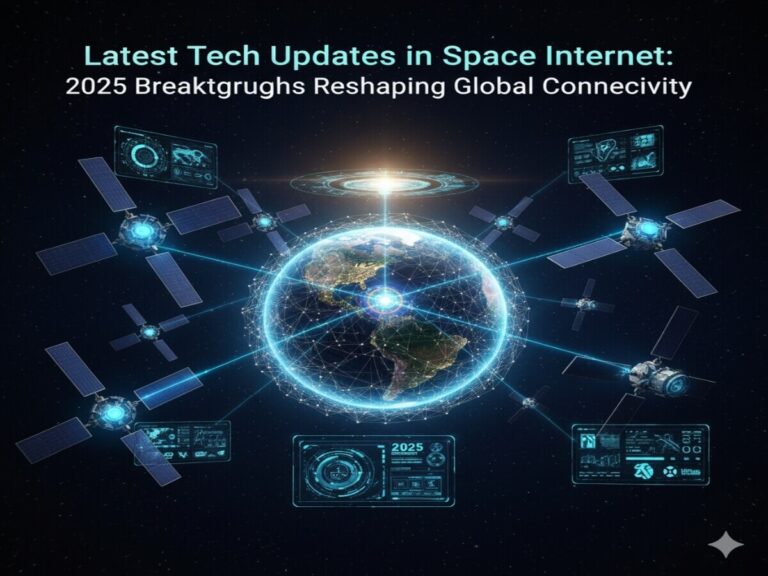
The technical achievement is staggering. Each satellite essentially functions as a cell tower orbiting 340 kilometers above Earth, equipped with advanced phased-array antennas and custom silicon that can handle the extreme Doppler shifts caused by satellites moving at tens of thousands of miles per hour. For those wondering how Starlink’s satellite internet technology works, this Direct-to-Cell system represents the next evolution of the constellation.
How 8 Million People Are Already Using It
What makes this particularly remarkable is the adoption rate. According to Starlink’s latest progress report, more than 8 million people are already relying on the service to connect their LTE phones in areas where terrestrial service is unavailable. That’s more users than legacy satellite providers Hughes Network Systems and Viasat combined ever served at their peak.
The service launched commercially in the United States through T-Mobile after receiving FCC approval in November 2024. T-Mobile President Mike Katz called it “a truly groundbreaking engineering breakthrough,” noting that customers can now stay connected “if they can see the sky.”
Real-World Impact: From Hurricanes to Hiking Trails
The system has already proven its life-saving potential. During Hurricanes Helene and Milton, the FCC granted SpaceX special emergency authority to activate Direct-to-Cell service in affected regions. Similarly, during the recent Los Angeles wildfires, the technology provided critical communication links when traditional infrastructure failed.
One documented case from New Zealand illustrates the system’s impact: a woman who came upon a car crash in a cellular dead zone was able to text emergency services through her Starlink-connected phone. First responders arrived within minutes – a rescue that wouldn’t have been possible with traditional cellular technology.
The Business Case: From $7.7B to $11.8B in One Year
The financial trajectory tells its own story. Market research firm Quilty Space estimates Starlink’s total revenue jumped from $7.7 billion in 2024 to a projected $11.8 billion in 2025. This explosive 53% growth is driven not just by consumer adoption but by lucrative government contracts.
Perhaps most significant is a previously undisclosed $537 million Pentagon contract to provide services for Ukraine’s military through 2027. Government contracts now comprise 28% of Starlink’s revenue, with the U.S. Space Force’s PLEO program representing the largest share.
The constellation’s customer base has more than doubled year-over-year, reaching 4.6 million active customers by the end of 2024 – up from 2 million in September 2023.
Technical Specifications: What Makes It Work
The architecture is deceptively simple yet extraordinarily complex. The completed first shell consists of 24 orbital planes with 13 satellites per plane, positioned at a 53-degree inclination. Each satellite carries an eNodeB modem – essentially turning it into a 4G LTE cell tower in space.
Ben Longmier, Senior Director of Satellite Engineering at SpaceX, revealed that once raised to their operational altitude of 360 kilometers, these satellites provide continuous coverage across vast geographical areas. The current bandwidth limitation is approximately 10 Mbps per beam, though Musk emphasized that “future constellations will be much more capable.”
The system leverages Starlink’s existing network of over 6,000 satellites through laser-based optical communication, enabling data rates up to 100 times faster than traditional radio frequency systems while offering superior security and bandwidth.
Global Rollout: Who’s Next?
While T-Mobile holds first-year exclusive rights in the United States, SpaceX has forged partnerships with major carriers worldwide. The growing alliance includes KDDI in Japan, Rogers in Canada, Optus and Telstra in Australia, One NZ in New Zealand, Salt in Switzerland, and Entel in Chile and Peru. Kyivstar in Ukraine and Virgin Media O2 in the UK have also signed on.
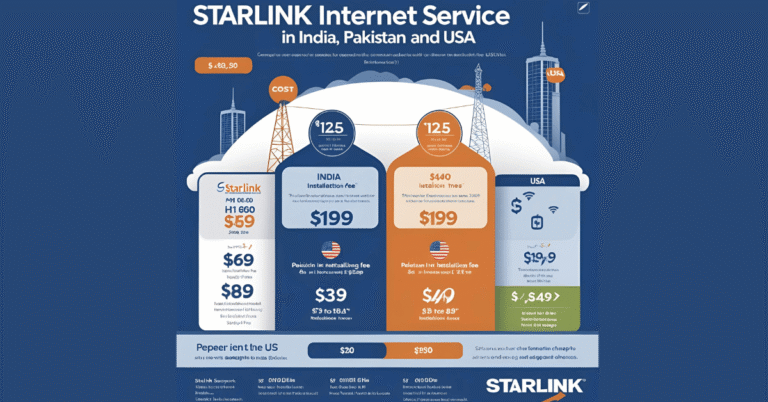
T-Mobile has opened registration for its beta program, which remains free through July 2025. After the official launch, the service will be included in T-Mobile’s Go5G Next plan, with other customers paying an additional $10 per month.
Compatible devices currently include iPhone 14 and later models, Google Pixel 9 series, and 2024 or newer Motorola phones. Customers don’t need to switch carriers – the service works through standard roaming agreements.
The Broader Context: SpaceX’s Record Year
The Direct-to-Cell milestone caps an extraordinary year for SpaceX. The company conducted 134 orbital launches in 2024 – a nearly 40% increase from 2023’s 96 launches. To put this in perspective, SpaceX’s Falcon 9 rocket flew more missions than all other rockets worldwide combined.
This launch cadence has been critical to scaling the Starlink constellation rapidly. The company can deploy satellites as needed, continuously updating the network with the newest technology – an advantage no traditional satellite operator can match.
What’s Coming Next: Voice, Data, and IoT
Text messaging represents just the beginning. Voice calling through apps became available in late 2024, with native voice calls and full data services scheduled for 2025. The system will also enable ubiquitous Internet of Things connectivity outside terrestrial coverage areas, supporting CAT-1, CAT-1 Bis, and CAT-4 IoT modems.
Industry analysts note that Starlink’s dominant position appears secure for the next few years, though Amazon’s Project Kuiper looms as potential competition. Amazon has announced plans to begin its own satellite launches in mid-2025, with SpaceX’s Falcon 9 rockets ironically contracted to launch three batches of competing Kuiper satellites.
The Bottom Line
Starlink Direct-to-Cell represents more than incremental improvement – it’s a fundamental reimagining of how mobile connectivity works. By turning the entire sky into a cellular network, SpaceX is systematically eliminating one of the last major limitations of modern smartphones.
For consumers, the promise is straightforward: reliable connectivity anywhere on Earth with a clear view of the sky. For the industry, it signals the beginning of a new era where satellite and terrestrial networks converge seamlessly.
As Sara Spangelo, SpaceX’s senior director of satellite engineering, noted: “Excited to turn on service in the US and other partner countries soon, providing peace of mind and emergency services wherever people may work, play, or travel.”
With 8 million users already connected and the technical infrastructure now in place, that future has arrived.
Key Takeaways:
- 362 satellites now operational in first Direct-to-Cell constellation
- 8 million+ users already connected worldwide
- $11.8 billion projected revenue for 2025 (53% growth)
- No hardware changes needed – works with existing phones
- Text messaging available now; voice and data coming in 2025
- $10/month add-on cost after free beta period ends
- Life-saving applications proven during hurricanes and emergencies
Related Coverage: For comprehensive guides on satellite internet technology, coverage maps, and service comparisons, visit our Starlink resource center.