
FCC Approves Starlink Direct-to-Cell Service: Your Smartphone Gets Satellite Internet in 2026
Revolutionary satellite technology eliminates need for cell towers as T-Mobile partnership brings space-based connectivity to standard smartphones
WASHINGTON, D.C. — In a landmark decision that could fundamentally reshape mobile communications, the Federal Communications Commission approved SpaceX’s Starlink direct-to-cell service Thursday, authorizing the company to provide satellite-based text messaging, voice calls, and data services directly to unmodified smartphones across the United States.
The 4-1 vote marks the culmination of an 18-month regulatory review and positions Starlink to launch commercial service in partnership with T-Mobile by mid-2026. Unlike traditional satellite phones that require specialized hardware, Starlink’s direct-to-cell technology works with existing smartphones, leveraging standard cellular protocols to connect devices directly to satellites in low Earth orbit.
How Direct-to-Cell Technology Works
“This represents the most significant advancement in mobile connectivity since the introduction of 4G LTE,” said FCC Chairwoman Jessica Rosenworcel during Thursday’s public meeting. “For the first time, Americans will have the option of seamless satellite connectivity using the phones already in their pockets.”
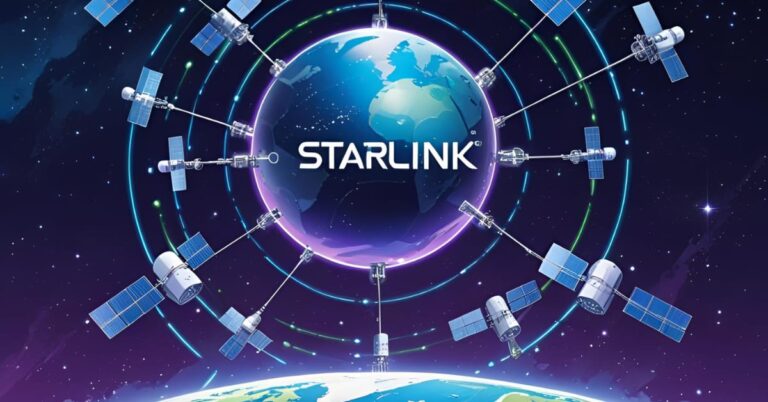
The technology operates through SpaceX’s second-generation Starlink satellites, which feature large phased-array antennas specifically designed to communicate with cellular devices. These satellites effectively function as “cell towers in space,” each capable of providing coverage across an area roughly equivalent to a small state.
When a smartphone loses connection to terrestrial cell towers, it can automatically switch to satellite mode, connecting to overhead Starlink satellites using the same LTE protocols already built into modern devices. The process requires no special apps, hardware modifications, or user intervention beyond a carrier software update enabling the feature.
For consumers interested in how Starlink’s satellite technology is revolutionizing global connectivity, this direct-to-cell capability represents the next evolution of the company’s infrastructure.
T-Mobile Partnership Details
T-Mobile will be the first carrier to offer the service in the United States, with initial deployment focused on text messaging capabilities. “We’re eliminating dead zones,” declared T-Mobile CEO Mike Sievert at a press conference following the FCC announcement. “Whether you’re hiking in national parks, driving through rural areas, or responding to emergencies, your phone will work.”
The partnership, first announced in August 2022, positions T-Mobile to offer nationwide satellite coverage included in most postpaid plans at no additional charge. Customers with compatible devices—essentially any smartphone manufactured after 2019 with LTE or 5G capabilities—will automatically gain access to the service once carrier updates roll out.
Initial service will provide text messaging at speeds sufficient for SMS and basic messaging apps. Voice calling capabilities are expected to launch by Q4 2026, with basic data services following in 2027. The phased rollout allows SpaceX to incrementally expand capacity as additional satellites reach orbit.
Technical Specifications and Limitations
Industry experts caution that direct-to-cell service won’t match the speeds and capacity of terrestrial networks. Each satellite can support approximately 1,000-2,000 simultaneous connections, with data speeds initially limited to 2-4 Mbps per device for basic services.
“Think of this as a safety net rather than a replacement for cellular networks,” explained Dr. Robert Martinez, telecommunications professor at MIT. “It’s designed to provide essential connectivity in areas where traditional infrastructure doesn’t exist or has failed.”
The service faces inherent physical limitations. Satellites orbiting at altitudes of 340 miles must communicate with devices operating at power levels originally designed for cell towers located just miles away. SpaceX addressed this challenge through advanced antenna technology and signal processing, but the physics still impose constraints on bandwidth and capacity.
Weather conditions can also affect service quality. Heavy rain, dense forest cover, and indoor locations will likely experience reduced or interrupted connectivity. Users will need a clear view of the sky for optimal performance, similar to requirements for satellite internet dishes.
Global Expansion Plans
While T-Mobile holds exclusive U.S. rights, SpaceX has signed similar agreements with carriers in Canada, Australia, New Zealand, Japan, and Switzerland. The company is in active negotiations with mobile operators across Europe, Latin America, and Asia, with announcements expected throughout 2026.
“Our goal is global coverage by 2027,” stated SpaceX Vice President of Starlink Business Development Jonathan Hofeller during a briefing with reporters. “We’re building a constellation designed to serve every cellular device on Earth, regardless of location.”
The international expansion faces varying regulatory hurdles. Some countries require local spectrum licensing that complicates deployment, while others have raised concerns about SpaceX’s market dominance in satellite communications. China and Russia have indicated they will not permit the service, citing national security considerations.
Impact on Emergency Services
Emergency management officials view the technology as a potential game-changer for disaster response. During hurricanes, wildfires, and other catastrophes that destroy terrestrial infrastructure, satellite connectivity could enable communications when they’re needed most.
“This capability could save lives,” noted Federal Emergency Management Agency Administrator Deanne Criswell in a statement. “When cell towers go down during disasters, first responders and survivors often lose the ability to communicate. Satellite backup could maintain that critical connection.”
The service’s role in emergency communications factored prominently in the FCC’s approval. Commissioners cited public safety benefits as justification for expedited regulatory review, noting that traditional emergency alert systems depend on functioning cellular networks.
SpaceX has committed to prioritizing emergency calls and public safety communications during crisis situations. The company is also developing integration with 911 systems to ensure emergency services can locate callers using satellite connections, though this functionality won’t be available at initial launch.
Competitive Response and Market Implications
The approval immediately intensifies pressure on SpaceX’s competitors. Apple, which launched its own satellite emergency messaging feature through Globalstar in 2022, faces potential obsolescence of its proprietary approach. The company has not publicly commented on Starlink’s FCC approval, though industry observers expect Apple to seek partnerships with satellite operators or develop its own expanded capabilities.
AST SpaceMobile and Lynk Global, both developing competing direct-to-cell technologies, saw their stock prices decline following the announcement. Both companies argue they can provide superior service through different technical approaches, but Starlink’s first-mover advantage and existing satellite constellation present formidable competitive barriers.
Traditional telecom equipment providers must also adapt. The technology potentially reduces demand for cell tower infrastructure in rural areas, though experts believe terrestrial networks will remain essential for high-density urban environments where satellite capacity would be insufficient.
Privacy and Security Considerations
Privacy advocates have raised concerns about the service’s data collection and security protocols. Because SpaceX operates the satellite network, the company technically has access to location data and communications metadata for users connecting through its system.
“We’re essentially creating a new telecommunications infrastructure controlled by a single private company,” cautioned cybersecurity researcher Dr. Emily Chen. “That concentration of power raises important questions about privacy protections, government access, and data security.”
SpaceX has stated that it will not store communications content and will treat user data according to the same privacy standards as traditional carriers. The company notes that T-Mobile maintains responsibility for customer privacy and regulatory compliance, with SpaceX serving primarily as infrastructure provider.
Law enforcement access to satellite-based communications remains an evolving legal question. The service operates across international boundaries, potentially complicating jurisdictional issues around lawful intercept capabilities and data retention requirements.
Economic and Infrastructure Implications
The technology could reduce the economic justification for rural cell tower deployment, potentially slowing infrastructure investment in remote areas. If satellite service proves adequate for basic communications, carriers may conclude that expensive tower construction isn’t necessary.
However, wireless industry representatives argue that terrestrial and satellite networks serve complementary rather than competing roles. “You can’t run a modern economy on 2-4 Mbps per device,” noted industry analyst Sarah Williams. “Urban areas will always require high-capacity fiber and cellular infrastructure.”
The service may prove most valuable in developing nations where cellular infrastructure remains limited. SpaceX’s global coverage could provide basic connectivity to billions of people currently without reliable mobile service, though regulatory approvals and carrier partnerships would still be required in each market.
Technical Challenges Ahead
SpaceX must still overcome significant technical hurdles before commercial launch. The company needs to deploy hundreds of additional second-generation satellites equipped with direct-to-cell capabilities. Current launch schedules project sufficient capacity for initial service by June 2026, but delays could push commercial availability into late 2026 or early 2027.
Network management also presents challenges. The system must seamlessly hand off connections between satellites as they orbit overhead, maintain synchronization across time zones, and balance capacity across regions with varying demand. SpaceX has tested these capabilities but has not demonstrated them at commercial scale.
According to Starlink’s official technology page, the company continues expanding its satellite constellation and refining direct-to-cell capabilities in preparation for commercial launch with carrier partners worldwide.
What This Means for Consumers
For most smartphone users, direct-to-cell service will function as an invisible backup, activating only when terrestrial coverage is unavailable. The feature won’t replace traditional cellular networks but will eliminate the frustration of complete service loss in remote areas.
T-Mobile customers with compatible devices should see the feature activate automatically through a software update, likely distributed in summer 2026. No special configuration or additional fees will be required for basic text messaging functionality. Voice and data services may carry additional charges when they become available.
Users should maintain realistic expectations about performance. The service is designed for emergency communications and basic connectivity, not for streaming video, video calls, or bandwidth-intensive applications. It represents a safety net rather than a performance upgrade.
Looking Forward
The FCC’s approval marks a pivotal moment in telecommunications history, potentially ending the concept of cellular dead zones within a few years. As SpaceX continues deploying satellites and expanding carrier partnerships, the vision of truly universal mobile connectivity moves closer to reality.
The technology’s success will depend on execution—SpaceX must deliver on its technical promises while navigating complex regulatory environments across dozens of countries. If successful, direct-to-cell satellite service could become as ubiquitous as Wi-Fi, fundamentally changing how we think about mobile connectivity.
For now, T-Mobile customers have reason for optimism. By late 2026, the phrase “no service” may become significantly less common, replaced by the reassurance of satellite backup whenever terrestrial networks fall short.
Sources: Federal Communications Commission announcements, T-Mobile press releases, SpaceX technical briefings, Starlink official documentation, telecommunications industry analyst reports, MIT telecommunications research.