
Starlink Coverage Map 2026: Where Is Satellite Internet Available Now?
Comprehensive guide to Starlink’s global expansion across 75+ countries with detailed coverage analysis and availability projections
SAN FRANCISCO, CALIFORNIA — As SpaceX’s Starlink satellite internet constellation continues its rapid expansion, understanding where the service is currently available—and where it’s headed next—has become increasingly important for consumers, businesses, and telecommunications analysts worldwide. With over 5,400 satellites now in orbit and coverage spanning more than 75 countries, Starlink has fundamentally transformed the satellite internet landscape.
The company’s growth trajectory shows no signs of slowing. SpaceX launched an average of 60 satellites per month throughout 2025, bringing total constellation size to levels that enable consistent service quality across most of North America, Europe, and Oceania. Yet significant gaps remain, particularly in Africa, South America, and parts of Asia where regulatory approvals continue to pose challenges.
Current Global Coverage Overview
Starlink’s coverage map has evolved dramatically since the service’s initial beta launch in 2020. The constellation now provides varying levels of service across six continents, with Antarctica representing the only landmass without any coverage authorization.
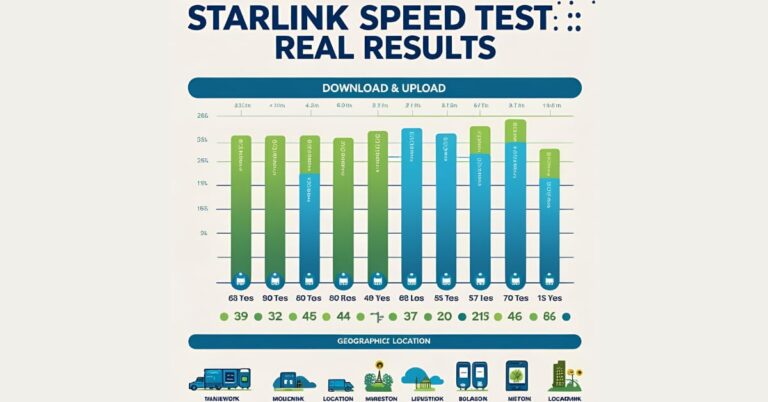
Coverage quality varies significantly by region. North America enjoys the most mature service, with median download speeds exceeding 150 Mbps and latency consistently below 30 milliseconds. European performance closely matches North American metrics in most markets, while newer regions like parts of Latin America and Southeast Asia experience more variable performance as satellite density increases.
Understanding how Starlink’s satellite network enables global internet connectivity helps explain both the service’s rapid expansion and its remaining limitations.
North America: Most Comprehensive Coverage
The United States and Canada represent Starlink’s most developed markets, with service available to virtually all addresses where the equipment can maintain a clear view of the sky. SpaceX has deployed over 2,000 satellites optimized for North American coverage, resulting in consistent performance even in remote areas.
In the United States, all 50 states now have Starlink availability, though service quality varies based on local demand and satellite coverage density. Urban and suburban areas that were once deprioritized have seen significant performance improvements as SpaceX deployed additional satellites and implemented more sophisticated network management systems.
Canada’s vast geography presented unique challenges that Starlink has largely overcome. Service now extends to remote territories including Yukon, Northwest Territories, and Nunavut, where traditional internet infrastructure was prohibitively expensive to deploy. The service has proven particularly valuable for indigenous communities, resource extraction operations, and scientific research stations.
Mexico received full coverage authorization in 2024, with service quality steadily improving throughout 2025. The country’s diverse geography—from coastal regions to mountainous interior—has served as a testing ground for Starlink’s ability to maintain consistent service across varied terrain and climatic conditions.
Europe: Mature Market with Regulatory Complexity
European coverage spans most of the continent, with 40+ countries now offering Starlink service. The European Union’s regulatory framework initially created challenges, but SpaceX successfully navigated spectrum allocation requirements and data sovereignty concerns to achieve broad market access.
The United Kingdom, Germany, France, Poland, and the Netherlands represent Starlink’s largest European markets. Service quality matches or exceeds North American performance in these countries, with median speeds frequently topping 200 Mbps during off-peak hours.
Scandinavian countries—Norway, Sweden, Finland, and Denmark—have embraced Starlink particularly enthusiastically. The region’s remote communities and challenging weather conditions made traditional internet infrastructure difficult and expensive to maintain, creating strong demand for satellite alternatives.
Southern Europe has experienced more gradual rollout. Spain, Italy, and Greece all have service availability, though coverage density remains lower than in Northern European markets. Portugal completed its regulatory approval process in early 2025, immediately seeing strong uptake in rural regions where DSL and cellular options remained limited.
According to Starlink’s official coverage information, the company continues expanding European capacity with regular satellite deployments optimized for the continent’s geography and user distribution.
Asia-Pacific: Rapid Growth Amid Regulatory Hurdles
The Asia-Pacific region presents both tremendous opportunity and significant challenges for Starlink. Japan, Australia, and New Zealand enjoy mature service comparable to North American quality, while China and India—representing massive potential markets—remain officially closed to Starlink operations.
Australia’s vast interior and dispersed population made it an ideal early market for Starlink. The service has become particularly popular in rural and remote areas where alternatives were limited to expensive, low-speed satellite connections. Mining operations, cattle stations, and aboriginal communities have been among the most enthusiastic adopters.
New Zealand’s two main islands both have comprehensive coverage, with performance metrics consistently ranking among Starlink’s best globally. The country’s regulatory environment proved relatively straightforward to navigate, enabling rapid deployment once initial approvals were secured.
Japan authorized Starlink service in late 2022, with coverage now extending across all main islands. The service has found particular adoption in mountainous regions where fiber deployment was economically challenging. Japan’s experience with natural disasters has also driven interest in Starlink as backup connectivity for emergency situations.
Southeast Asian expansion has proceeded more gradually. The Philippines received approval in 2024 and has seen strong growth, particularly in island communities where undersea cable infrastructure was absent. Thailand and Malaysia both authorized service in 2025, though coverage remains concentrated in certain regions as SpaceX works through regulatory requirements.
Indonesia represents a massive potential market that has proven challenging to penetrate. The country’s more than 17,000 islands create obvious use cases for satellite internet, but complex regulatory frameworks and concerns about foreign telecommunications infrastructure have slowed approval processes.
Latin America: Emerging Markets with Strong Growth
Latin American coverage has expanded rapidly over the past 18 months, with service now available in more than 15 countries across Central and South America. Brazil and Chile represent the region’s most mature markets, while several countries await final regulatory approvals.
Brazil’s approval came in 2023, unleashing pent-up demand across the country’s vast interior. The Amazon basin, with its challenging terrain and dispersed population, has been a particular focus. Environmental researchers, indigenous communities, and ecotourism operations have rapidly adopted the technology.
Chile’s unique geography—a narrow strip extending nearly 3,000 miles north to south—created interesting challenges that Starlink’s constellation architecture handled well. The service has proven popular in both Patagonian regions and the Atacama Desert, where traditional infrastructure was limited.
Argentina, Peru, and Colombia all received service authorization in 2024-2025. Uptake has been strongest in rural and remote areas, though urban adoption has also grown as users seek alternatives to incumbent internet service providers.
Central American countries including Costa Rica, Panama, and Guatemala have approved Starlink operations, with service quality steadily improving as satellite coverage density increases. The region’s vulnerability to natural disasters has driven particular interest in satellite connectivity as a resilient backup option.
Africa: Limited but Growing Presence
African coverage remains Starlink’s most significant gap, with service officially available in fewer than 10 countries despite the continent’s obvious need for improved connectivity. Regulatory complexities, concerns about foreign ownership of telecommunications infrastructure, and political considerations have all contributed to slower expansion.
Nigeria became the first Sub-Saharan African country to approve Starlink in early 2023. The service has found strong adoption among businesses, educational institutions, and affluent consumers in Lagos and other major cities. Rural deployment has been slower, constrained by equipment costs that remain prohibitive for most households.
Rwanda, Mozambique, and Kenya have all approved Starlink operations, with service gradually rolling out across these markets. The technology has proven particularly valuable for schools, medical clinics, and agricultural operations in areas lacking reliable terrestrial connectivity.
South Africa’s regulatory approval came in late 2024, immediately creating the continent’s largest Starlink market by subscriber count. The country’s relatively developed telecommunications sector and higher average incomes have enabled faster adoption than in other African markets.
Several additional countries have active approval processes underway, including Ghana, Tanzania, and Zambia. However, regulatory timelines remain uncertain, and concerns about pricing, local content requirements, and data sovereignty continue to complicate negotiations.
Middle East: Selective Coverage with Strategic Focus
Middle Eastern coverage remains limited and strategically focused. Israel approved service in early 2024, quickly seeing adoption in both civilian and military contexts. The country’s advanced technology sector and security considerations made Starlink an attractive option despite well-developed terrestrial infrastructure.
The United Arab Emirates authorized limited service in 2025, primarily for maritime and aviation applications. Full residential service availability remains under regulatory review as the country balances interest in advanced technologies with concerns about information control.
Saudi Arabia has engaged in discussions with SpaceX about potential service authorization, though no timeline has been publicly announced. The country’s Vision 2030 development plan emphasizes technological advancement, potentially creating opportunities for Starlink deployment in remote regions.
Several other Middle Eastern countries have expressed interest in authorizing Starlink service but face political complications given regional dynamics and existing telecommunications monopolies.
Performance Variations and Capacity Constraints
While Starlink’s global coverage map shows broad availability, actual service quality varies significantly based on multiple factors. Understanding these variations is crucial for potential subscribers evaluating whether the service will meet their needs.
Satellite density directly impacts both speeds and capacity. Regions covered by more satellites experience better performance and can support more simultaneous users. North America and Europe benefit from the highest satellite concentrations, resulting in the most consistent service quality.
Ground station locations also affect performance. Data traveling through Starlink’s satellite network must eventually reach a ground station to access the broader internet. Regions with more nearby ground stations experience lower latency and often faster speeds.
Network congestion has emerged as a growing concern in some markets. As subscriber numbers increase in certain areas, available bandwidth must be shared among more users, potentially reducing individual speeds during peak usage times. SpaceX has addressed this through dynamic capacity management and accelerated satellite deployments in high-demand regions.
Seasonal variations affect service quality in some locations. Heavy snow can accumulate on dishes, requiring built-in heating systems to maintain connectivity. Dense foliage in summer months can obstruct signals more than bare winter trees. SpaceX has implemented software optimizations to mitigate these effects, but physics imposes certain limitations.
Future Expansion Plans and Timeline
SpaceX’s roadmap for Starlink expansion includes both geographical coverage increases and performance improvements through next-generation satellites. The company has regulatory approval to eventually deploy up to 42,000 satellites, though achieving this scale will take many years.
Near-term expansion focuses on filling coverage gaps in Latin America, Africa, and Asia. SpaceX has indicated that achieving comprehensive global coverage outside of restricted countries remains a priority for 2026-2027.
Generation 3 satellites, currently in testing, will dramatically increase capacity while reducing costs. These larger spacecraft can handle significantly more simultaneous connections and deliver faster speeds to each user. Initial deployments are expected in late 2026, with widespread availability by 2028.
The Starship launch system, once operational, will accelerate deployment timelines by carrying many more satellites per launch than current Falcon 9 rockets. This could enable SpaceX to reach target constellation densities years ahead of original projections.
Direct-to-cell capability, recently approved by the FCC, represents an entirely new service category that will expand Starlink’s addressable market beyond traditional internet subscribers. This technology will work in conjunction with standard Starlink service to provide comprehensive connectivity solutions.
Regulatory Challenges and Market Access
Despite Starlink’s technological capabilities, regulatory approval remains the primary constraint on global expansion. Each country maintains sovereignty over telecommunications services within its borders, creating a complex patchwork of approval processes.
Spectrum allocation represents a fundamental challenge. Radio frequencies suitable for satellite communications are limited and heavily regulated. Starlink must coordinate with existing satellite operators and terrestrial wireless services to avoid interference, requiring negotiations with regulatory bodies in each country.
Data sovereignty concerns have emerged as a significant barrier in some markets. Countries understandably want to ensure that telecommunications infrastructure cannot be used for surveillance or information control by foreign entities. SpaceX has addressed these concerns through local ground stations and data handling agreements, but negotiations remain complex.
National security considerations affect approval processes in many countries. Governments must balance the economic and social benefits of improved connectivity against potential military or intelligence implications of foreign-owned satellite infrastructure.
Local telecommunications incumbents have lobbied against Starlink approval in multiple markets, arguing that the service represents unfair competition. These political dynamics have complicated approval processes even in countries where technical and regulatory requirements have been satisfied.
Comparing Starlink to Terrestrial Alternatives
Understanding where Starlink fits in the broader internet connectivity landscape helps clarify which users and regions benefit most from satellite service versus terrestrial alternatives.
In urban and suburban areas with fiber optic or cable internet, Starlink typically offers lower speeds at higher prices. These markets aren’t the service’s primary focus, though some users choose Starlink for its lower latency compared to traditional satellite internet or as backup connectivity.
Rural areas without fiber access represent Starlink’s core market. The service dramatically outperforms DSL and fixed wireless options in most cases, delivering speeds and latency suitable for remote work, online education, and streaming video.
Remote locations completely lacking terrestrial infrastructure see the most dramatic impact from Starlink availability. Islands, ships at sea, research stations, and wilderness areas that previously had no connectivity options or expensive, low-performance alternatives now have access to broadband-quality service.
Mobile applications including maritime, aviation, and RV usage represent growing market segments where Starlink provides unique value. The service’s portability and performance while in motion create use cases that terrestrial infrastructure simply cannot address.
Impact on Digital Divide and Development
Starlink’s global expansion carries significant implications for reducing the digital divide between connected and unconnected populations. While equipment costs remain prohibitive for many, the technology has already demonstrated transformative potential in underserved regions.
Educational institutions in remote areas have adopted Starlink to provide students with internet access previously unavailable. Schools in rural Brazil, indigenous communities in Canada, and island nations in the Pacific have all reported dramatic improvements in educational outcomes.
Healthcare delivery has benefited from telemedicine capabilities enabled by reliable broadband. Remote clinics can now consult with specialists, access electronic medical records, and provide higher-quality care than was possible with limited or no internet connectivity.
Economic development in remote regions receives a boost from reliable internet access. Small businesses can access global markets, remote workers can live in rural areas while maintaining urban employment, and local entrepreneurs can develop online services.
However, critics note that equipment costs starting at $299 for the dish plus monthly fees of $90-120 remain out of reach for many who would benefit most from improved connectivity. Addressing this challenge will require either dramatic cost reductions or subsidy programs in developing markets.
What This Means for Consumers
For potential Starlink subscribers, understanding current coverage and future expansion plans is essential to making informed decisions. The service excels in certain use cases while remaining impractical for others.
Rural residents in covered areas should carefully evaluate whether Starlink’s performance justifies its cost compared to available alternatives. In many cases, particularly where DSL speeds remain in single-digit Mbps, the service represents a transformative upgrade. However, users with access to fiber or high-quality cable internet may find terrestrial options more cost-effective.
Mobile users including RV travelers, boaters, and digital nomads should consider whether Starlink’s unique capabilities justify the premium pricing for mobile plans. The ability to maintain connectivity while in motion creates value that traditional internet services cannot match.
Businesses evaluating Starlink should assess both primary connectivity and backup use cases. In locations lacking reliable alternatives, Starlink may serve as primary internet access. In areas with existing infrastructure, the service can provide valuable redundancy against outages.
International users should verify service availability in their specific location and understand that coverage maps show potential availability rather than guaranteed performance. Local satellite density, ground station locations, and network congestion all affect actual service quality.
Looking Forward
Starlink’s coverage map will continue evolving rapidly throughout 2026 and beyond. The company’s aggressive deployment schedule, combined with ongoing regulatory approvals in new markets, ensures that geographical availability will expand significantly over the coming years.
Performance improvements through next-generation satellites will transform the service from broadband alternative to genuine fiber competitor in many use cases. Higher speeds, lower latency, and increased capacity will enable applications currently impractical with satellite connections.
Global coverage approaching true universality appears achievable within the next 3-5 years, assuming regulatory approvals continue and technical execution proceeds as planned. This would mark a historic shift in telecommunications, making broadband internet genuinely available to virtually any location on Earth.
For now, Starlink represents the most ambitious and successful attempt yet to bridge the digital divide through satellite technology. While challenges remain, the service has already transformed connectivity options for millions of users and points toward a future where geography no longer determines internet access quality.
Sources: SpaceX official coverage data, telecommunications regulatory filings, Ookla speed test analyses, satellite industry reports, international telecommunications policy research